Computational Biosciences, Biomedicine and Bioinformatics
Interdisciplinary fields combining biology, computer science, statistics, and data science to analyze and interpret biological data.

The lab's work sits within the Department's broader research areas, spanning theory, systems, and applications.
Interdisciplinary fields combining biology, computer science, statistics, and data science to analyze and interpret biological data.
Brain processing, memory, and decision-making studied through theoretical modeling and experimental data analysis.
Computational methods to study and model social phenomena.
Computational methods that enable machines to interpret and understand visual data from images and videos.
Design and analysis of protocols for secure computation, privacy, and provable security.
Algorithms and models that can be used to solve real-world problems, from theory to deployment.
Understanding the societal impacts of NLP systems, including bias, fairness, and hate speech detection.
Mathematical and algorithmic methods for solving large-scale optimization problems.
The behavior of complex systems and the application of computational techniques to understand and predict it.
Algorithm design, algorithmic game theory, computational complexity, discrete optimization, and learning theory.
Ongoing research initiatives at the lab. Some are open for new student and collaborator involvement.
Builds an AI-guided solver that adaptively chooses intermediate monomial orders while an exact computer-algebra system computes and verifies each Gröbner-basis step. First tested on polynomial systems from error-correcting codes, then evaluated on broader structured systems, including problems from algebraic cryptanalysis.
Proposed by Emmanuela Orsini, Assistant Professor · emmanuela.orsini@unibocconi.it
Investigates which design choices actually drive the quality of DECODE-RNA's (our single-cell RNA transformer-based model) learned cell representations: the expression-encoding scheme, protein-language-model priors, the dual-attention structure, and the multi-task curriculum, through controlled ablations measured on both in-distribution accuracy and cross-tissue transfer. Introduces new self-supervised objectives that teach the model to distinguish genuine biological silence from technical dropout, and characterises how representation quality scales with data and model size. First validated on blood and PBMC cells, then extended to whole-body Census data and multi-GPU training to derive a scale-aware pre-training recipe.
Required: solid Python and PyTorch; understanding of deep learning fundamentals (transformers, attention, self-supervised/masked pre-training, optimisation, learning-rate schedules); ability to design controlled experiments and rigorously interpret training curves.
A plus: PyTorch Lightning; experience running jobs on a GPU/Slurm cluster and with multi-GPU (DDP) training; basic familiarity with single-cell RNA-seq and Scanpy/AnnData (can be learned on the job).
Proposed by Andrea Tangherloni, Assistant Professor · andrea.tangherloni@unibocconi.it
Builds a framework that distils the complementary strengths of several existing single-cell foundation models (e.g., scGPT, Geneformer, UCE, scVI) into DECODE-RNA's unified gene vocabulary and continuous-expression representation. Because the teacher models live in incompatible embedding spaces, the central challenge is cross-space alignment: preserving each teacher's cell–cell similarity structure and learning per-teacher weighting so the student inherits batch correction, biological resolution, and gene-level knowledge from the most reliable source. First tested on a foetal reference dataset using standard data-integration metrics, then evaluated on cross-tissue transfer against each individual teacher.
Required: strong Python and PyTorch; grasp of representation learning and the core idea of knowledge distillation; comfort working with embeddings and similarity/contrastive objectives.
A plus: familiarity with pretrained model ecosystems (scGPT, Geneformer, UCE, scVI); notions of representation alignment (e.g., CKA, Procrustes); single-cell data integration metrics (scib) and Scanpy/AnnData.
Proposed by Andrea Tangherloni, Assistant Professor · andrea.tangherloni@unibocconi.it
Tests whether the gene–gene relationships DECODE-RNA extracts from its cross-attention weights reflect real biological regulation rather than mere co-expression. Builds an evaluation harness that benchmarks the model's zero-shot networks against curated regulons and experimental evidence (DoRothEA/CollecTRI, ChIP-seq, and perturbation data), and compares them with established network inference methods such as GENIE3, SCENIC, and CellOracle. First applied to blood cell types, then extended to further tissues to assess how cell-type-specific and transferable the inferred regulation is. More biology-leaning and less deep-learning-heavy than the other two projects.
Required: Python and data analysis; a computational-biology/bioinformatics background with an understanding of gene regulation (transcription factors and their targets); sound evaluation methodology (AUROC/AUPRC, precision–recall, benchmarking design).
A plus: familiarity with regulatory resources (DoRothEA/CollecTRI, ChIP-seq/ChIP-Atlas, perturbation datasets) and network-inference tools (GENIE3, SCENIC, CellOracle); Scanpy/AnnData for single-cell handling.
Proposed by Andrea Tangherloni, Assistant Professor · andrea.tangherloni@unibocconi.it
Faculty working across the lab's research areas.
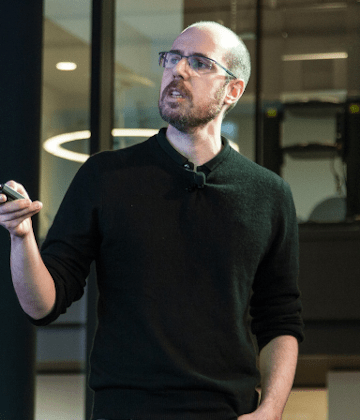
Has directed the BSc in Mathematical and Computing Sciences for Artificial Intelligence since 2023/24. Research centers on the application of statistical mechanics to machine learning and computational neuroscience, and more generally to large-scale inference and optimization problems, with particular expertise in examining the loss landscape of neural networks, analytically and numerically. Earned a PhD in Computational Neuroscience at the University of Turin after an undergraduate degree in Theoretical Physics from the University of Trieste. Teaches machine learning and artificial intelligence courses using Python and Julia.
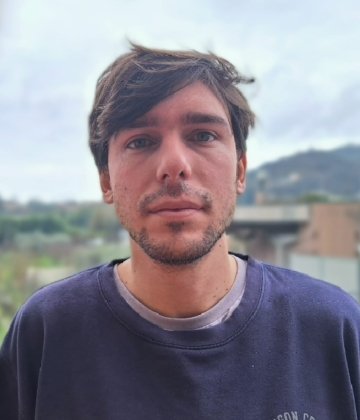
Research concentrates on understanding the inner workings of neural networks, identifying their limitations, and enhancing their efficiency, as well as how deep learning can be applied across scientific and engineering domains. Holds a PhD from ETH Zurich and completed postdoctoral work at EPFL, plus master's degrees in Machine Learning from Cambridge University and Physics from the University of Genoa. Teaches courses spanning computer science fundamentals, machine learning, artificial intelligence, deep learning, and computational approaches to climate challenges.
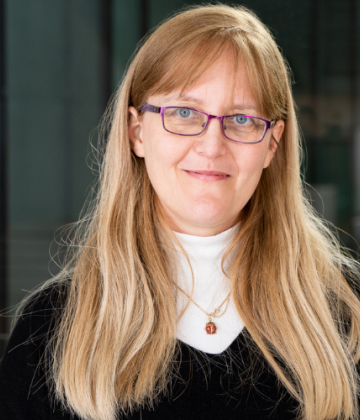
Recipient of a European Research Council Award, holding dual leadership roles supervising teams at both Bocconi and the University of Oxford. Previously Full Professor of Computational Biology and Cancer Genomics, and Group Leader, at the University of Oxford. Research centers on applying artificial intelligence and machine learning to biomedicine, genomics, and transcriptomics, developing powerful computational methods to translate genomic data into knowledge and ultimately improve human health. Holds a PhD in Physics from the University of London and a degree in Theoretical Physics from the University of Turin.
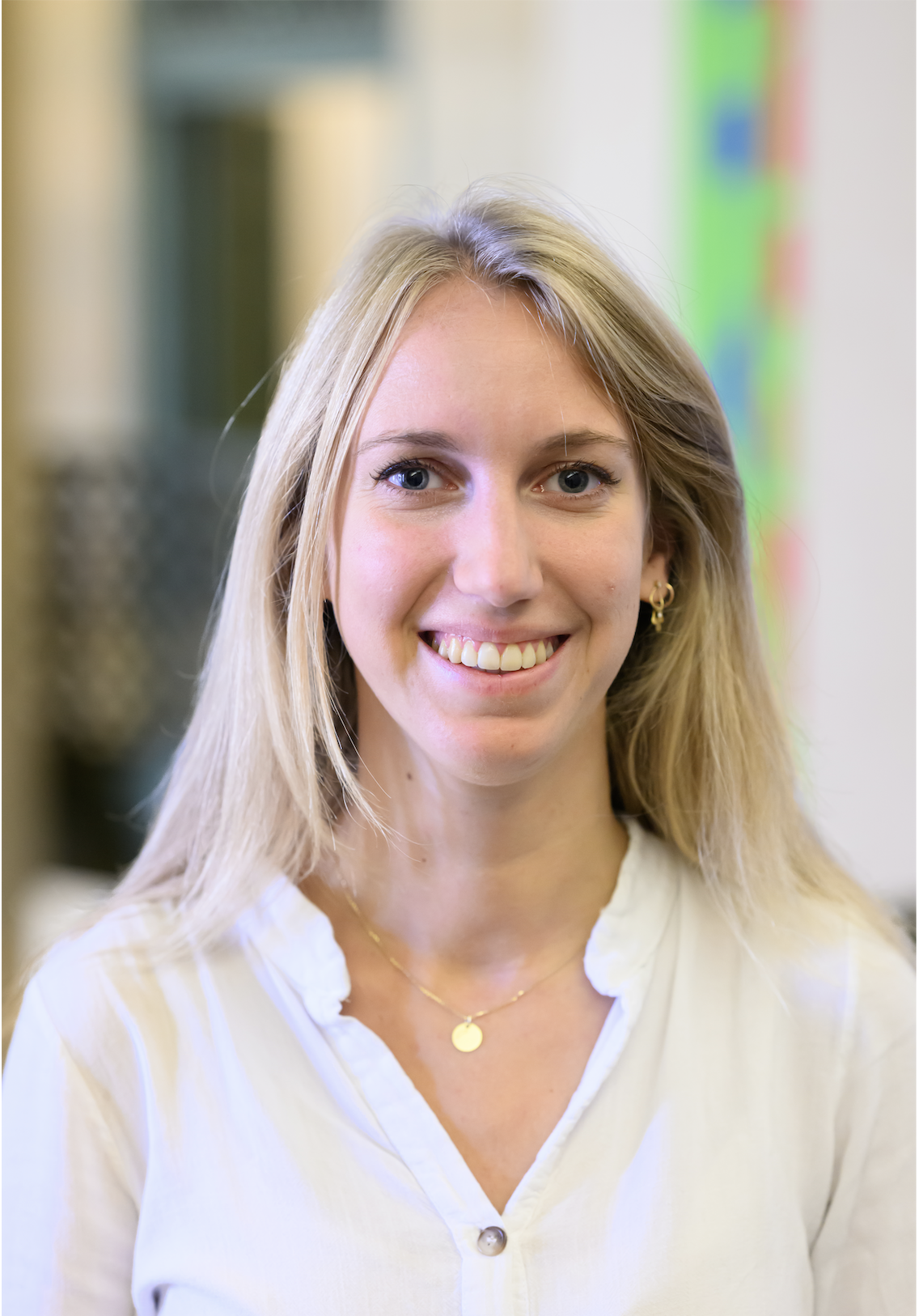
Previously held postdoctoral positions at MIT and at Inria/ENS Paris, and earned her PhD from EPFL under the supervision of Emmanuel Abbé. Her research interests span the understanding of deep learning methods, with the goal of making them more accessible and efficient.
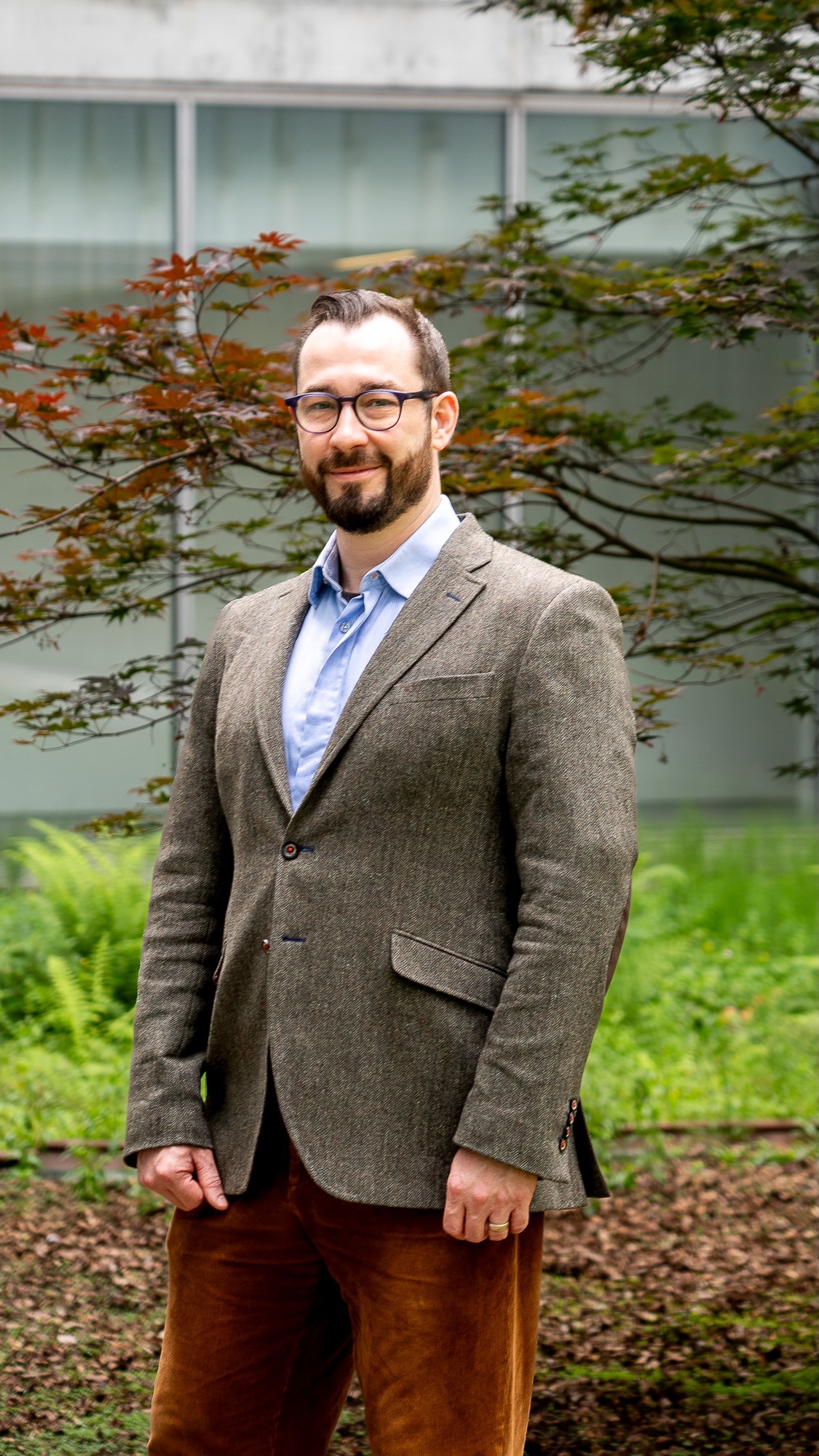
Professor in the Computing Sciences Department of Bocconi University, where he leads the MilaNLP lab together with Debora Nozza. Also scientific director of the Data and Marketing Insights research unit. Interested in what computers can tell us about language and what language can tell us about society, including questions of bias and algorithmic fairness in machine learning. Author of over 150 articles, including 3 best and one outstanding paper award, and two textbooks on text processing in Python for social scientists. Awarded an ERC Starting Grant in 2020 for research on demographic bias in NLP.
Neural Networks, Machine Learning, Statistical Inference, Disordered Systems, Statistical Physics, Combinatorial Optimization. Currently teaches Python programming courses at the Bachelor and MSc level, and Machine Learning courses at the Bachelor and PhD level.
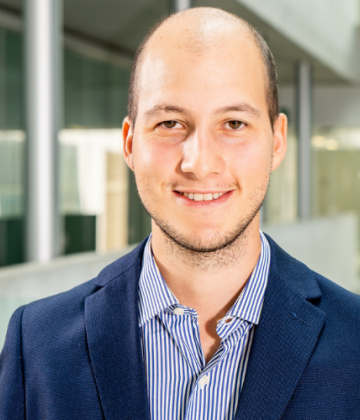
Research focuses on the statistical physics of disordered systems (i.e. spin glasses), with applications spanning constraint optimization, machine learning, and high-dimensional statistics. Earned a degree in theoretical physics from Sapienza University of Rome in 2015 under Giorgio Parisi's guidance, and a PhD in physics at the University of Milan in 2018 under joint supervision of Sergio Caracciolo and Giorgio Parisi. Was a postdoc in Bocconi's artificial intelligence lab from 2018 to 2021 before advancing to his current position. Work published in venues including Physical Review Letters and Physical Review E.
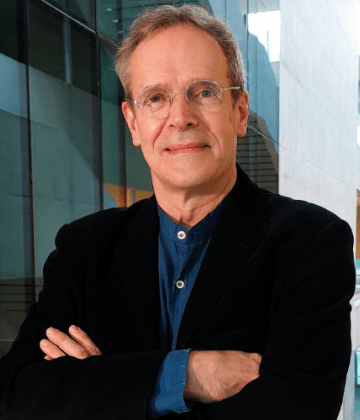
Research examines emergent phenomena in complex systems with many interacting components, applying statistical physics to information theory, computer science, machine learning, and biophysics. Recent work focuses on information processing in neural networks, machine learning, and deep networks, with particular interest in how data structure influences learning and generalization. Studied physics at École Normale Supérieure in Paris, earned his PhD in 1984, and served as Research Director at CNRS and Université Paris Sud before serving as Director of École Normale Supérieure from 2012 to 2022, prior to joining Bocconi.
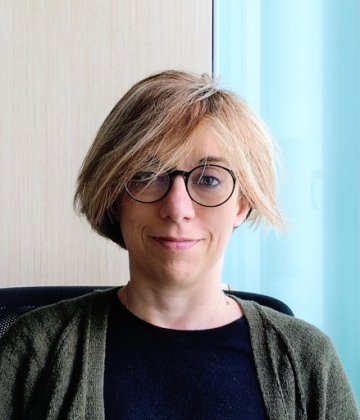
Works primarily on cryptography, in particular multi-party computation, homomorphic encryption and post-quantum cryptography. Her research spans MPC protocols, pseudorandom correlation generators and functions (PCG/PCF), VOLE-based zero-knowledge, and post-quantum signatures. Her background is rooted in mathematics and algebraic coding theory, holding a master's degree and a PhD in Mathematics with a thesis on algebraic coding theory and computational algebra.
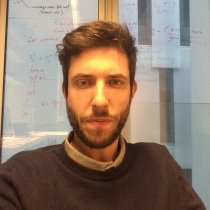
Interested in the statistical mechanics description of learning and optimization problems and in understanding to what extent the knowledge of simple learning models can help predict the phenomenology of deep neural networks. Recently focused on the empirical and analytical description of the loss landscape of artificial neural networks.
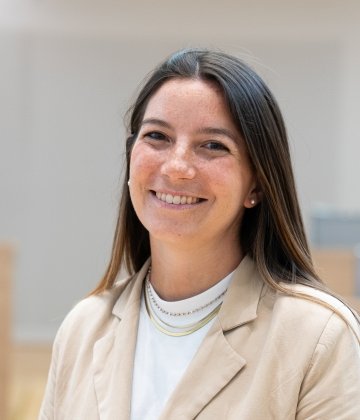
Focuses on computer vision, in particular video understanding and how visual perception can be enriched by other modalities such as language, audio, and 3D information. Was a Postdoctoral Researcher at the Smart Eyewear Lab, a joint research center between EssilorLuxottica and Politecnico di Milano, and previously a Student Researcher at Google in Zurich. Earned her PhD in Computer Vision from Politecnico di Torino, including visiting researcher positions at the University of Bristol and UC Berkeley. Teaches Deep Learning for Computer Vision and Computer Vision and Image Processing at Bocconi.
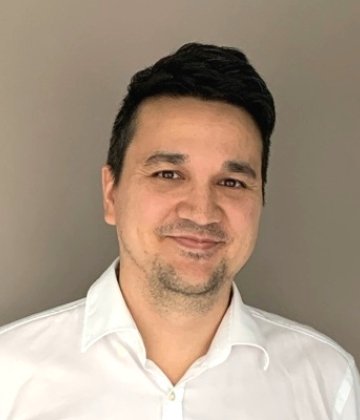
Research focuses on the computational aspects of discrete optimization, and related areas including linear algebra, combinatorics, and numerical analysis. Scholarly work addresses topics in mathematical programming and optimization algorithms, with publications in journals such as Mathematical Programming and the INFORMS Journal on Computing. Teaches in the Software Engineering program at Bocconi.
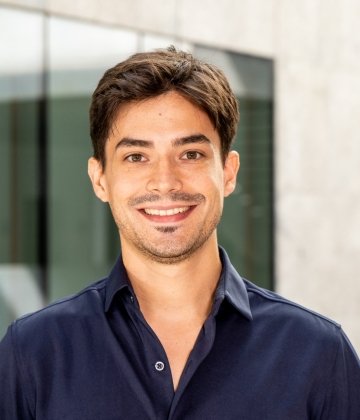
Works at the interface between Machine Learning and Statistical Physics, aiming to build theoretical frameworks that illuminate how learning algorithms behave, with interests spanning transfer learning, continual learning, self-supervised learning, knowledge distillation, adversarial learning, and curriculum learning. Earned his PhD in 2018 from the Polytechnic of Turin, followed by postdoctoral positions at Microsoft Research in Cambridge (MA), ENS Paris, and EPFL Lausanne. Teaches Foundations of Physics I in the BAI program and Computer Programming in the BEMACS program.
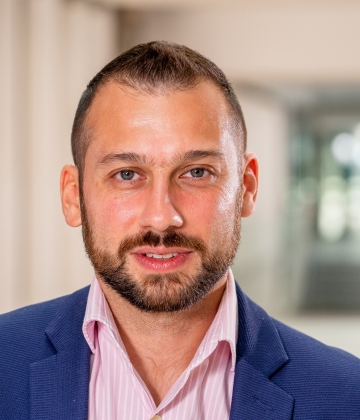
Joined Bocconi's Department of Computing Sciences in December 2022. Earned his BSc, MSc, and PhD in Computer Science from the University of Milano-Bicocca (2013, 2015, 2019), with doctoral work on high-performance computing for complex problems in the life sciences. Previously a Research Associate in the Department of Haematology at the University of Cambridge and the Cambridge Stem Cell Institute, with visiting research at the Wellcome Sanger Institute, followed by postdoctoral positions at the University of Bergamo and the Bocconi Institute for Data Science and Analytics (BIDSA). Research lies at the intersection of artificial intelligence, computational biology, and bioinformatics, combining deep learning and high-performance computing to model single-cell omics data toward personalised and regenerative medicine. Teaches on the MSc in AI and the MSc in Data Analytics and Artificial Intelligence in Health Sciences, and leads DECODE (FIS-2024-02465), developing single-cell RNA and ATAC foundation models for gene regulatory network inference.
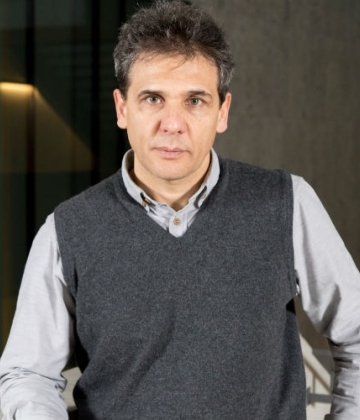
Theoretical physicist specializing in machine learning and computational methods, with research spanning statistical physics, computer science, and machine learning — focusing on learning algorithms, out-of-equilibrium dynamics, combinatorial optimization, and computational neuroscience applications. Earned his PhD in Theoretical Physics from the University of Turin, was head of the Statistical Physics Group at the International Centre for Theoretical Physics in Trieste, and held a full professorship at the Polytechnic University of Turin before joining Bocconi in 2017. Recipient of an ERC Advanced Grant and the 2016 Lars Onsager Prize in Theoretical Statistical Physics.
Recent work from the lab. Full list available on request.
ICML 2026
Physical Review X
SciPost Physics 18 (4), 118
CRYPTO 2025
CVPR 2025
ICLR 2025
NeurIPS 2025
NeurIPS 2025
ICML 2025
ICML 2025
We welcome inquiries from students, researchers, and industry partners.